Handwritten Mail for E-commerce
The box is the only marketing they actually open.
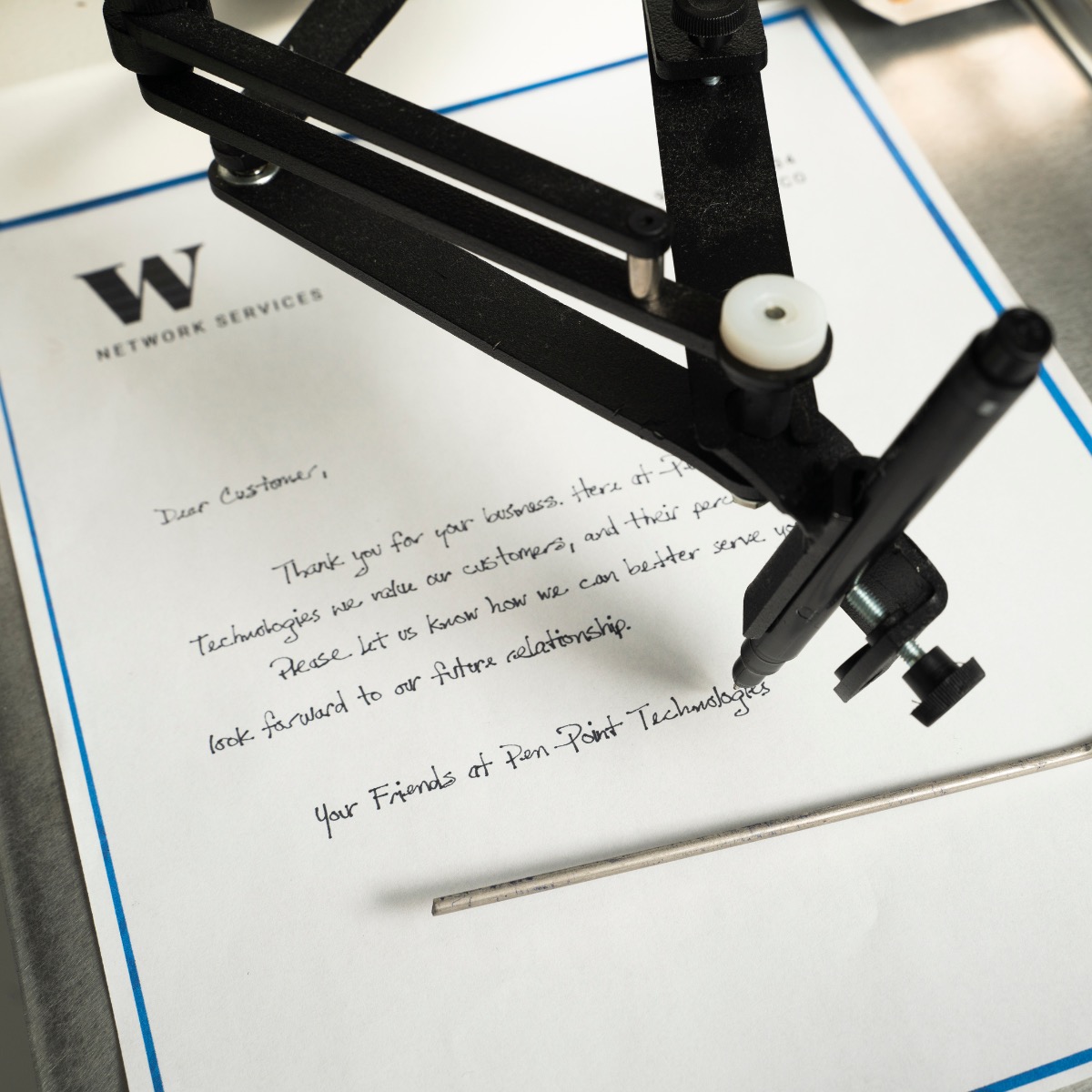
Your email gets filtered, your retargeting gets blocked, and your insert card gets recycled — unless someone wrote it. A handwriting machine puts a real pen note in every package, and writes the retention mail your inbox campaigns can’t reach.
Where brands point it
Six programs, one machine.
A note in every box
The cheapest moment to earn a second order is the one where the customer is already opening your package. A real handwritten card in the box turns a transaction into a first impression people photograph and post.
Second-order nudges
Write to the customers who bought once and went quiet. A short handwritten note lands in a channel their inbox isn't competing in — and it reaches the people who never open marketing email at all.
VIP and top-spender programs
Your top few percent of customers carry the margin. Handwritten mail is one of the only ways to treat them differently at a cost that still makes sense per customer.
Product-specific messaging
Because every piece is written individually from your data, the note can reference what they actually bought — a care tip for that item, a pairing suggestion, a restock reminder timed to how long it lasts.
Win-backs and subscription saves
Cancellations and lapsed subscribers respond to a real letter in a way they don't respond to a discount email. It's a small list, which is exactly when handwritten mail is affordable.
Review and UGC requests
Ask for the review on paper, after the product has landed. Handwritten asks convert the happy customers who would never click a link in an automated follow-up.
How your data gets in
An export, not an integration.
We’ll be straight with you, because finding this out at setup would be worse: there is no live API. The machine doesn’t pull orders out of Shopify on its own.
What actually happens is simpler than most people expect. You export the segment you want — yesterday’s orders, everyone who bought twice, the customers who haven’t ordered in ninety days — as a CSV. You load it into the software, map the columns you want written, and press start. Every column in that file is available to the writing, so the note can name the product, the order number, or how long it’s been.
In practice most brands settle into a rhythm: pull the file once a day or once a week, run the batch, and drop the cards in the boxes as they pack. The Autograph software saves the job as a template, so after the first setup it’s a file swap.
E-commerce mail, answered.
Does it integrate with Shopify?
Not through a live API — and we'd rather tell you now than have you find out during setup. The workflow is an export: pull the orders or customer segment you want from Shopify (or any platform) as a CSV, load it into our software, and the machine writes each piece from that data. Anything that lives in your export can drive the writing — name, what they ordered, order count, how long since they last bought.
Can each card say something different based on what they bought?
Yes. The same way a mail merge works: any column in your export can drop into the writing. If you want genuinely different messages rather than a swapped name, write the full message per customer in its own spreadsheet column and the machine writes each one individually.
How many cards can we get through in a day?
The machine writes about 110 envelopes an hour on a standard three-line address, and it runs unattended — you stack 500 sheets or 150 envelopes, press start, and go back to work. For a note card going in the box, most brands batch a day's or a week's orders and run them in one pass.
Is it worth it at our order volume?
Sometimes the honest answer is no. If you're shipping 100–200 orders a month, outsourcing handwritten cards is cheaper than owning a machine, and we'll point you to a service. Owning starts to pencil when you're mailing consistently enough that per-piece outsourcing costs more than the machine does — or when you want to write to segments on your own schedule instead of a vendor's.
More detail on cost: machine vs outsourcing vs manual, or see the full FAQ.